
Naturaleza de la lana
H
emos escrito esta pequeña guía para poder responder a muchas dudas que os surgen sobre los hilos que compráis en nuestra tienda. Es muy importante que lo leas hasta final, ya que varios temas son concernientes a la garantía de fábrica. Es decir, son situaciones en las que los fabricantes no reponen el hilado, en caso de disconformidad del cliente. Cualquier duda nos consultas
We have written this little guide to be able to answer many questions that arise about the threads that you buy or are going to buy in the store. It is very important that you read it to the end, since several issues are related to the factory warranty. Any questions ask us
Desteñido / Fade
Damos por sentado que cuando compramos ropa, ésta puede desteñir al lavar, aunque no siempre ocurre. La lana al ser un textil, no es ajena a esta situación
- Solo destiñen las lanas teñidas a mano? No, también pueden desteñir las lanas de tipo industrial, aunque es más usual en las lanas teñidas a mano.
- Todos los colores destiñen? Suelen desteñir más los colores fuertes o muy saturados, rojos, lilas azules.
- He tejido una pieza toda con el mismo color, hay alguna manera de evitar que destiña? Los fabricantes recomiendan poner unas gotas de vinagre blanco en el agua al bloquear.
- Qué puedo hacer para utilizar en una misma pieza un hilo claro con otro oscuro ? Los fabricantes recomiendan lavar antes de tejer la madeja, y poner unas gotas de vinagre blanco y dejar secar la madeja del color más oscuro o fuerte.
- Me ha desteñido una labor, el fabricante me cambia el hilo? No, los fabricantes indican que esto es normal y por tanto, no hacen reposición del hilo. Aunque a ti te parezca que destiñe mucho, no se puede recoger ni cambiar la madeja. Los fabricantes suelen tener en su página web más información y frases de estilo, «lavar con colores similares».
- Me han desteñido las manos y/o agujas al tejer… También debido al ph o sudor manos puede desteñir y el proveedor considera es un tema normal.
We take it for granted that when we buy clothes, they can fade when washed, although this is not always the case. Wool, being a textile, is no stranger to this situation
Mi lana huele…
Es normal que los hilos huelan, unos más que otros, es un material que proviene de animales y además se usan tintes en su producción
My wool smells…
It is normal the yarn smells, some more than others, it is a material that comes from animals and dyed are also used in its production
Tengo nudos en el hilo…
Es normal que haya nudos, lo que no es normal es que en una madeja de 100 gramos haya muchos. Tampoco es normal que un hilo que no sea de una sola hebra o 1 ply se rompa al tejer o encuentres zonas como quemadas en el hilo
I have knots in the yarn…
It is normal that there are knots, what is not normal is that in a skein of 100 grams there are more than 4 knots. It is also not normal for a yarn that is not a single strand or 1 ply to break when weaving or find burnt areas in the yarn
Para qué sirven las etiquetas?
Has terminado de tejer tu labor y tiras las etiquetas, No lo hagas!
Te cuento, cuando abrí la tienda, observé que los fabricantes daban esta indicación y pensaba, para qué sirve una etiqueta una vez terminada la labor?. Lamentablemente hace unos meses supe el motivo. Una tejedora lavó su labor y al hacerlo, apareció una franja más clara, que correspondía con un ovillo. Al pedir la reposición a fábrica, solicitó las etiquetas. El cliente no las tenía. No le hicieron reposición de las madejas. El motivo?
Lo entiendo perfectamente. La fábrica puede pensar que la tienda, o sea nosotros, le habíamos vendido, distintas tintadas al cliente, podría pasar no? Nosotros nunca lo hacemos pero hay de todo en el mundo. En ese caso, puedo asegurar que no fue así porque era la primera vez comprábamos el hilo y habíamos pedido 30 0 40 madejas de ese color. Pero hay más, también puede ser que el cliente tenga una madeja de otra labor anterior y por error, la haya mezclado. Resumiendo hasta que laves tu labor, no tires las etiquetas.
Otro motivo por el que debes guardar la etiqueta… has comprado una madeja en la tienda y no te llega para terminar la labor. Si no guardas la etiqueta, no sabrás qué tintada es. Nosotros no guardamos un histórico de la tintada enviada al cliente.
Por este mismo motivo, y porque normalmente las lanas teñidas a mano no tienen un lote de tintada, te recomendamos no compres la lana justa, si te falta, no tenemos manera de saber qué lote de lana te hemos mandado. Es decir, haces un pedido, no te llega, haces otro. Nosotros te mandaremos el lote que tenemos, pero no podemos saber si es igual al anterior lote ya que tenemos varios lotes a la vez. Como dijimos antes, no tenemos un seguimiento del lote se manda al cliente. Por ello si al tejer se nota, y esto es muy probable pasa, no podremos recogerte la madeja ni cambiarla.
What are the labels for?
You have finished knitting your work and you throw away the labels, don’t do it!
I tell you, when I opened the store, I observed that the manufacturers gave this indication and I thought, what is the use of a label once the work is finished. Unfortunately a few months ago I found out the reason. A weaver washed her work and when washing, a fringe appeared, which corresponded to a ball. When requesting the factory replacement, he requested the labels. The client did not have them. They did not replace the skeins. The reason?
I perfectly understand. The factory may think that the store, we, had sold different tints to the customer. I can assure you that this is not the case because it was the first time we bought the yarn and we had ordered 30 or 40 skeins. But there is more, it may also be that the client has a skein from another previous work and has mixed it by mistake.
It may also happen that you have bought a skein in the store and it does not reach you to finish the work. If you don’t keep the label, you won’t know what tint it is.
Al tejer mi lana teñida a mano me han quedado manchones
Es normal, las lanas teñidas a mano, pueden tener zonas más oscuras y si coinciden en una misma zona pueden hacer manchones en la labor
When knitting my hand-dyed wool I have left spots
It is normal, hand-dyed wool may have darker areas and if they coincide in the same area they may cause stains on the work.
Tengo zonas claras en el hilo
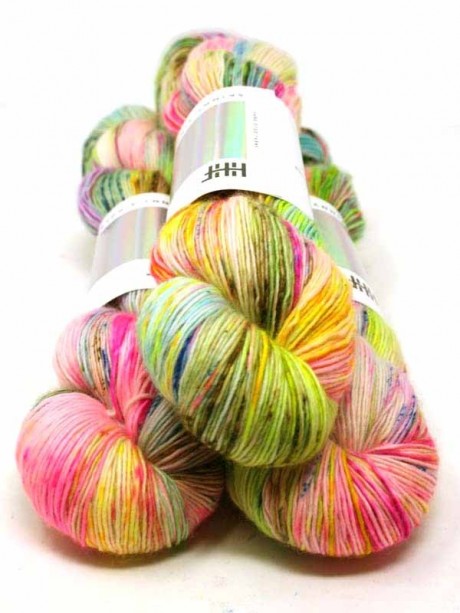
Los fabricantes de hilados teñidos a mano indican que es posible encontrar zonas sin teñir en la madeja. Os copio un comentario de un proveedor para clarificar el tema:
«I buy hand-dyed yarn all the time from different dyers and there are always white spots, light sections, darker sections, sometimes a splatter of another color that shouldn’t be there and in this industry we embrace this as the nature of hand dyeing»
I have light areas in the yarn
Manufacturers of hand-dyed yarn indicate that it is possible to find undyed areas in the skein. I copy a comment from one of them to clarify the issue:
«I buy hand-dyed yarn all the time from different dyers and there are always white spots, light sections, darker sections, sometimes a splatter of another color that shouldn’t be there and in this industry we embrace this as the nature of hand dyeing»
El color no se parece al que vi en Ravelry, web del proveedor, otra web
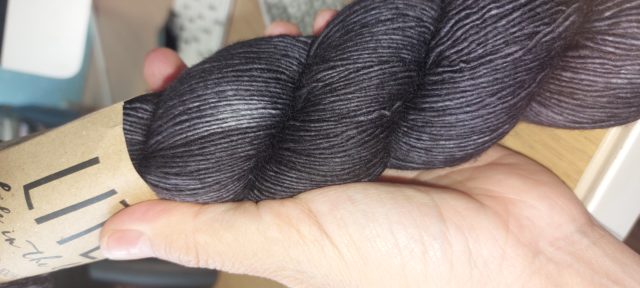
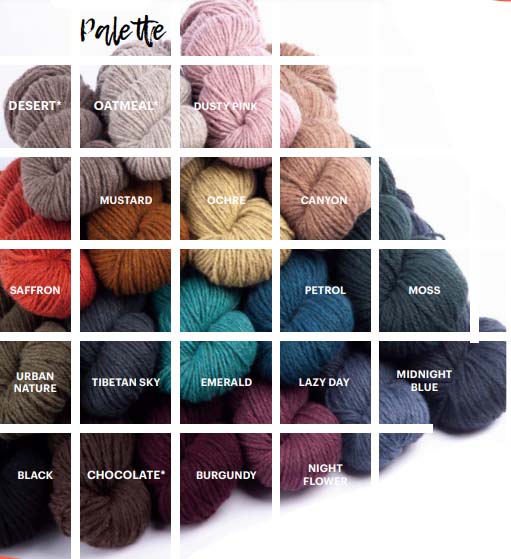
Por favor, no te guies por lo que ves o informaciones en webs externas. Por ello tomamos fotos de cada tintada. Los colores matizados o multi varian mucho de tintada en tintada. Solo te puedes guiar de las fotos de nuestra web. Además un usuario de ravelry toma las fotos con el móvil y no se van a ajustar a la realidad.
De la misma manera, por favor, compra la cantidad suficiente de hilo, si te quedas sin hilo es muy probable no te coincida en ningún caso con la nueva madeja y no podremos conseguir la tintada anterior, incluso en las lanas no teñidas a mano
The color does not look like the one I saw on Ravelry, the supplier’s website, another website
Please do not be guided by what you see or information on external websites. That’s why we take photos of each tint. The nuanced or multi colors vary greatly from tint to tint. You can only guide yourself from the photos on our website. Furthermore, a Ravelry user takes the photos with his mobile phone and they are not going to correspond to reality.
In the same way, please buy enough yarn, if you run out of yarn it is very likely that it will not match the new skein in any case and we will not be able to obtain the previous dyed one, even in non-hand dyed wool.
El mohair del mismo color que el hilo no me coincide exactamente
Los colores varían según la base que esté teñidos, por tanto, el mismo color en distintas calidades no tiene por qué ser igual. No es lo mismo el brillo de un hilo con seda que otro de alpaca
The mohair of the same color as the yarn does not match me exactly
The colors vary depending on the base they are dyed, therefore, the same color in different qualities does not have to be the same. The shine of a silk thread is not the same as that of an alpaca yarn.
Mi hilo tiene como una pelusa, pelillo
Es normal en los merinos especialmente, pelusilla, bolitas, etc
My yarn has like fluff, hair
It is normal in merinos especially, fluff, small balls, etc.

PALOMA
19 septiembre, 2023 at 11:20 amMagnífico Blog para aclararnos más sobre las lanas, gracias Bravo¡¡¡¡¡
Picknitshop
17 agosto, 2024 at 6:16 pmMuchas gracias
Reme
27 enero, 2025 at 1:25 pmYa sé que puede variar los tonos, pero lo de ésta madeja de mohair es significativamente diferente, muy diferente, de hecho creo que se le fue la mano a la hora de teñirla, he tejido una muestra y se me ve burdeos, creo que el color Arco iris en mohair no da ese efecto. En cualquier caso ya no puedo descambiarla pero sí podríais aseguraros la próxima vez en enviar alguna que contenga todos los colores del modelo Arcoiris, gracias de todas formas
Picknitshop
4 abril, 2025 at 9:14 amHola
acabo de ver el mensaje
El tema de los colores es que cada vez que se tiñen madejas, es un lote distinto en número y en colores. Lo cual por ello, nosotros publicamos fotos acordes a la tintada que nos llega. Es decir, si uno ve en Ravelry o a una amiga que tejió un hilo, esto no quiere decir que la tintada compres sea igual a eso. Así y todo dentro del mismo lote puede variar algo.
Esto puede pasar también con las teñidas industrial